Apple’s September 2026 lineup: iPhone 18 Pro, iPhone Duo, new watches and AirPods 5
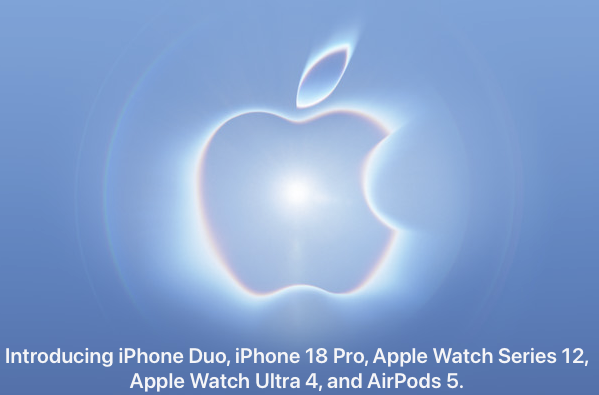
Apple’s September event introduced more than routine annual revisions. The company announced the iPhone 18 Pro and iPhone 18 Pro Max, its first foldable iPhone—the iPhone Duo—along with Apple Watch Series 12, Apple Watch Ultra 4 and AirPods 5.
Plan carefully for the operating-system releases
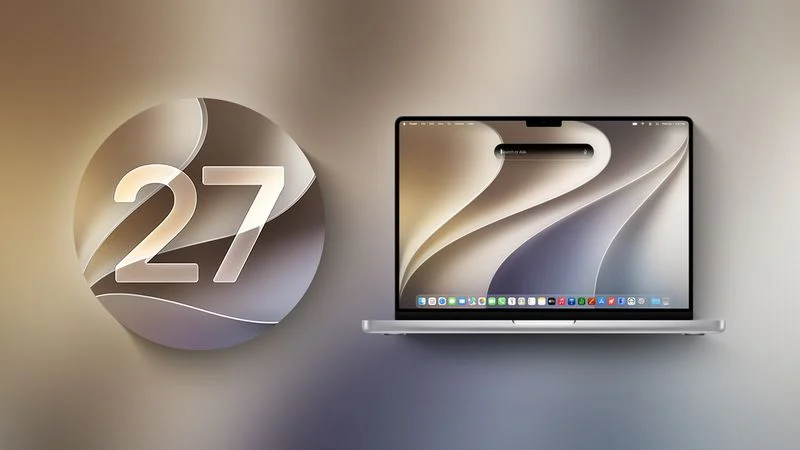
Apple has confirmed that iOS 27, watchOS 27, macOS 27 Golden Gate, iPadOS 27, tvOS 27 and visionOS 27 will ship on September 14.
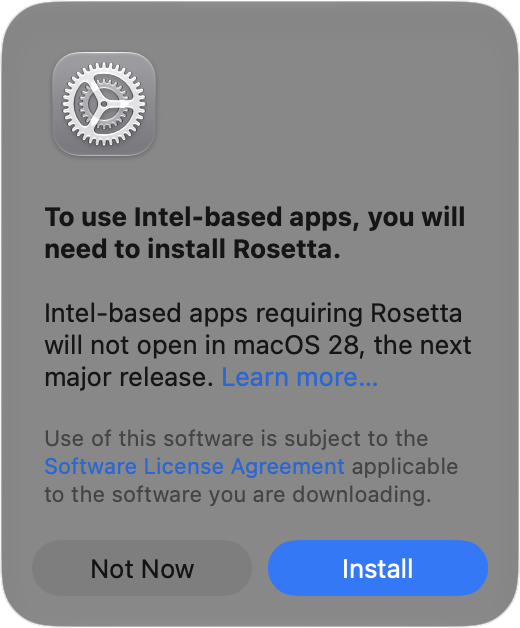
For essential business devices, a cautious rollout remains sensible. Wait a week or two before upgrading production hardware, and consider delaying Golden Gate for a few months while you confirm that required Mac applications are compatible. Create a current backup before installing any major update.
For organizations managing Apple fleets, these releases are also a reason to review compatibility testing, deployment rings, backup policies and support documentation before making the updates broadly available.
iPhone 18 Pro and iPhone 18 Pro Max
The iPhone 18 Pro and iPhone 18 Pro Max update the camera system, processing performance and battery life. Apple did not announce a standard iPhone 18; rumors suggest that model may arrive in early 2027.
The principal camera change is a 48-megapixel Fusion Main camera with a variable aperture. It offers four settings—ƒ/1.48, ƒ/1.8, ƒ/2.8 and ƒ/4.0. The Camera app selects an aperture according to lighting conditions, while new Pro controls allow manual adjustment. The wider ƒ/1.48 setting should help in low light and produce a shallower depth of field for stronger bokeh. The Ultra Wide and Telephoto cameras are unchanged from the iPhone 17 Pro.
Apple’s A20 Pro chip delivers up to 20% faster CPU performance and 40% faster GPU performance than the previous A19 Pro. Its Dual 16-core Neural Engine provides twice the AI processing power. Apple has also made the Dynamic Island, which houses the Face ID sensor, smaller while allowing it to display up to three Live Activities at once.
Battery estimates use Apple’s new “typical use” metric: up to 24 hours for the iPhone 18 Pro and up to 30 hours for the Pro Max. With a 60W-or-higher adapter, the iPhone 18 Pro can reach 50% charge in 15 minutes.
The iPhone 18 Pro starts at $1,199 and the Pro Max at $1,299, each $100 more than the corresponding previous model because of the ongoing memory shortage. Storage upgrades have also become significantly more expensive. Color choices are black, silver, glacier and burgundy. Pre-orders open at 5 a.m. Pacific on September 12, with availability beginning September 18.
Apple will continue selling the iPhone 17e at $699, iPhone 16 at $799, iPhone 17 at $899 and iPhone Air at $1,099. Each is now $100 more expensive than before the event.
Unless a business user specifically needs the best available iPhone camera, highest performance or longest battery life, an upgrade may not be necessary. An iPhone 15 Pro or newer device supports Apple Intelligence, which Apple is emphasizing in iOS 27, and will likely remain sufficient for many users.
iPhone Duo brings a foldable design
The iPhone Duo is Apple’s first foldable iPhone. While existing foldable Android phones have offered an interesting but sometimes flawed alternative, Apple is positioning the Duo around industrial design and software integration.
When closed, the device is approximately the size of a passport book. Its 5.4-inch outer display provides 90% of the screen area of the iPhone 18 Pro. Opening the device reveals a 7.6-inch inner display, 50% larger than the iPhone 18 Pro Max. That additional space is intended for media, games and productivity applications. A nano-texture finish reduces glare and makes the display crease less noticeable.
Apple says the hinge and integrated magnet array provide a smooth, secure feel. Despite the folding mechanism, the iPhone Duo has an IP68 water-resistance rating—up to 6 meters for 30 minutes—matching the iPhone 18 Pro. Ceramic Shield protects the back, while Ceramic Shield 2 protects the front.
The Duo uses Touch ID in its side button rather than Face ID. It runs on the same A20 Pro chip as the iPhone 18 Pro models, and Apple rates it for up to 24 hours of typical-use battery life.
iOS 27 has been adapted for the larger and changing form factor. Lock Screen controls, the Dock, Dynamic Island and app navigation move to the side to preserve vertical content space. When opened, the device displays two Home Screen pages, with Today View—a scrolling widget list—on the left. Content responds as the phone folds, reorients when the device is turned sideways and switches to the appropriate display when flipped. Split View lets two apps run side by side, borrowing from iPadOS, while StandBy can activate when the Duo is set down even when it is not charging.
The camera system consists of a 48-megapixel Fusion Main camera and a 48-megapixel Fusion Ultra Wide camera. There is no variable aperture or Telephoto camera. The folding design enables several specialized experiences: Smart Take uses on-device AI to capture photos automatically while subjects pose; Duo Preview shows a live preview on the outer display so subjects can help guide a shot; and Kid Cue uses Peanuts animations to attract children’s attention. Duo FaceTime lets people who are with the user participate in a video call on the outer display.
The iPhone Duo begins at $1,999 in star white and night sky. Pre-orders start October 16, with availability from October 23. Apple Pencil support is scheduled for later this year.
This is an early-adopter product and is aimed at people who want a large display in a pocketable format. At $1,999, it costs more than an iPhone 18 Pro and an iPad mini combined. For organizations, the Duo’s price and unusual form factor make it a device to evaluate through a specific use case rather than a default fleet replacement.
Apple Watch Series 12 and Ultra 4
Apple Watch Series 12 and Apple Watch Ultra 4 emphasize more accurate health sensing and add Audio Intelligence capabilities powered by the S11 chip.
Apple’s new Health Sensing System uses larger, more efficient green LEDs to measure heart rate every five seconds throughout the day—60 times more frequently than before. Heart-rate variability is measured up to 24 times more often. These readings support Readiness, which reviews recent activity, training load, vital signs and sleep score to produce a score from 0 to 10. It also provides one of four recommendations: Recover, Pace Yourself, Ready or Go For It. The score changes during the day as additional data arrives.
Audio Intelligence adds accessibility and convenience features. Sound Recognition can alert Deaf users and people who are hard of hearing to doorbells, sirens and crying babies. Shazam automatically identifies nearby music and displays the result in the Smart Stack. Live Rewind shows the preceding 15 seconds of a conversation as text after a double press of the Digital Crown. Siri Recap produces high-level conversation summaries for later review.
Live Rewind and Siri Recap are expected in beta later this year. Both require an iPhone 16 or newer, excluding the iPhone 16e. Apple says these features do not create or retain audio recordings: raw audio is handled in a hardware-isolated Secure Exclave and deleted immediately. Live Rewind snippets and Siri Recap summaries synchronized through iCloud are end-to-end encrypted. The listening capabilities nevertheless warrant a privacy review before deployment in workplaces.
Series 12 provides up to 10 hours of workout battery life, 25% more than Series 11, while retaining up to 24 hours of ordinary use. A 15-minute charge can provide up to 12 hours of battery life.
Aluminum models use Ceramic Shield 2, which Apple says is 60% tougher than the previous Ion-X glass. A ceramic case is available in pearl white and night blue. Other finishes include dark bronze, black, light gold and space gray aluminum, as well as radiant gold and natural titanium.
Ultra 4 includes the same Health Sensing System and Audio Intelligence features. It is rated for up to 50 hours of everyday use, up to 25 hours in Extended Workout mode with full GPS and heart-rate monitoring, and up to 45 hours in Max Extended Workout mode. It also supports the new fast charging.
Pricing is unchanged: Series 12 starts at $399 and Ultra 4 at $799. Pre-orders are open, with availability beginning September 18. Apple Watch SE 3 remains available from $249.
For owners of Series 10 or Series 11, the upgrade case may be weak unless Audio Intelligence is especially valuable. Owners of older watches may be more interested in the improved battery life. watchOS 27 requires Series 9 or newer, SE 3 or Ultra 2 or newer.
AirPods 5 add ANC across the open-ear range
AirPods 5 bring Active Noise Cancellation to Apple’s entire open-ear AirPods line. Both the standard model and the version with a wireless charging case include ANC, Transparency mode, Adaptive Audio, Conversation Awareness, Voice Isolation, Personalized Spatial Audio and Live Translation.
AirPods 4 carried an IP54 dust- and water-resistance rating. AirPods 5 improve that to IP57, meaning they should withstand temporary immersion for up to 30 minutes.
The wireless-charging-case version adds stem-based volume swiping, longer battery life—five hours with ANC compared with four hours for the base model—support for Apple Watch and Qi chargers, and a case speaker for Find My.
AirPods 5 with Wireless Charging Case cost $149, $30 less than the $179 AirPods 4 with ANC they replace. The base model remains $129. ANC is therefore more accessible, although users who need the strongest noise cancellation should consider AirPods Pro 3. Replacing working AirPods is unlikely to be worthwhile unless improved ANC is needed.
What this means for Apple environments
The new hardware creates several distinct management decisions rather than one universal upgrade recommendation. Prioritize compatibility testing for iOS 27 and macOS 27 Golden Gate, validate privacy and support requirements for Audio Intelligence, and assess whether camera, battery, foldable-display or accessibility capabilities map to an actual business need.
For most organizations, staged deployment and documented hardware standards will be more valuable than adopting every new model immediately. Virtua Computers can help businesses review Apple device compatibility, prepare upgrade plans and manage rollout risk.